Three days. That is how much time passed between the opening of a new restaurant on Brickell Key and the controlled implosion of the hotel that used to anchor the island's dining scene. If you assumed the two events were connected, that the new place opened as part of the same project that just came down, you are not alone. But they are not connected at all, and the gap between what people assume and what actually happened tells you something real about how this island works.
The 25-year run that ended last spring
The Mandarin Oriental, Miami closed permanently on May 31, 2025, after 25 years on the southern tip of Brickell Key. It was Miami's only true private-island hotel and the only Five-Star spa property in Florida, and its restaurant, La Mar, was the closest thing the island had to a dinner reservation you didn't have to think twice about. When the hotel closed, La Mar closed with it.
For the better part of a year, that left a real gap. Not a metaphorical one. If you lived on Brickell Key and wanted a sit-down dinner without crossing the bridge into Brickell proper, there wasn't an obvious answer.
Then, on April 9, 2026, The Mexican opened at 601 Brickell Key Drive. Three days later, on April 12, Swire Properties completed a controlled implosion of the old Mandarin Oriental building and its six-story parking structure at 500 Brickell Key Drive, clearing the site for what comes next. The sequence matters more than it looks like it should.
The timeline, laid out
| Milestone | Date | Location |
|---|---|---|
| Mandarin Oriental Miami closes after 25 years; La Mar closes with it | May 31, 2025 | 500 Brickell Key Drive |
| The Mexican opens | April 9, 2026 | 601 Brickell Key Drive |
| Old hotel and parking structure imploded | April 12, 2026 | 500 Brickell Key Drive |
| Groundbreaking on new towers targeted | Late 2026 | 500 Brickell Key Drive |
| The Residences at Mandarin Oriental complete | 2030 | 500 Brickell Key Drive |
Two different addresses on the same small island, moving on two entirely different clocks. That is the part worth sitting with.
Why the restaurant and the tower are not the same story
It is easy to assume that when a big hospitality brand leaves, the neighborhood has to wait out the entire redevelopment cycle to get anything back. That is true for the hotel itself. It is not true for dining.
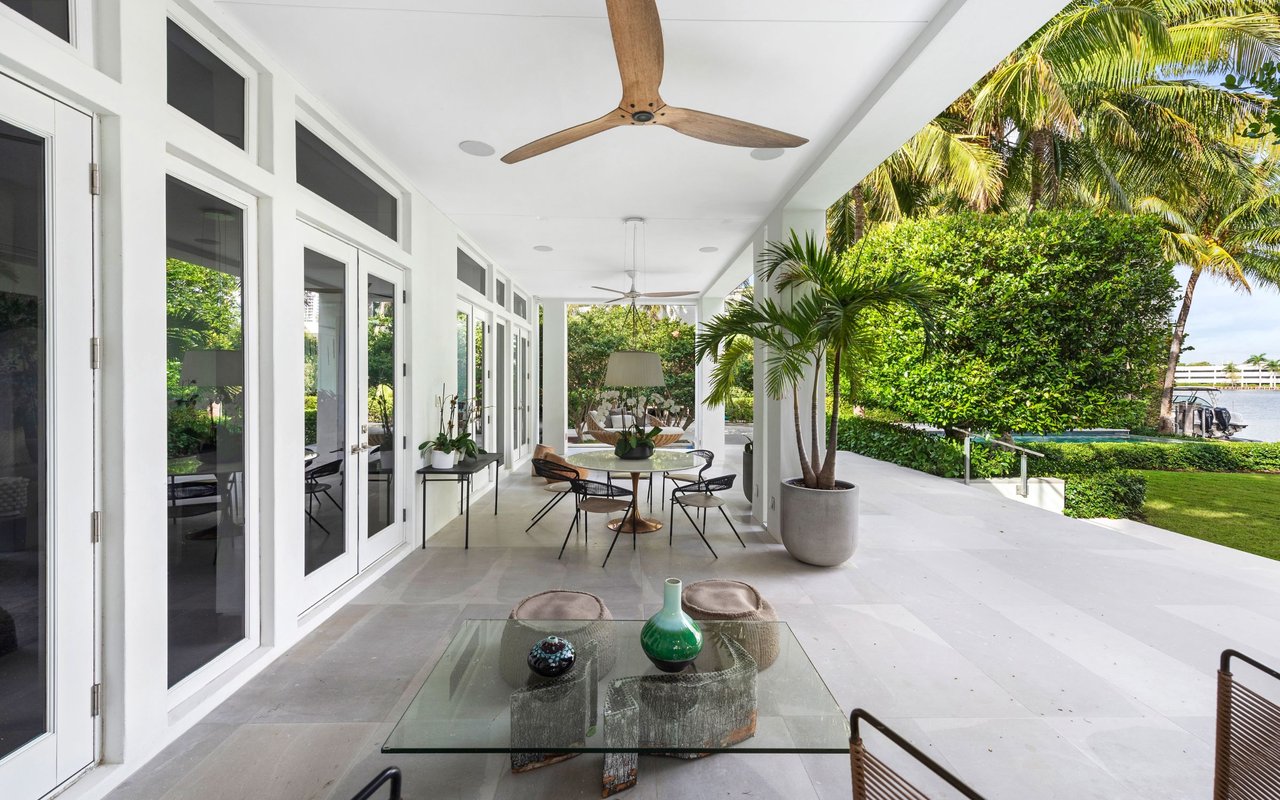
The Mexican has nothing to do with the Mandarin Oriental site. It occupies a different building entirely, an existing waterfront high-rise, and it opened on a restaurant-industry timeline rather than a mega-development one. The concept is an expansion of a Dallas flagship recognized by the Prix Versailles as one of the world's most beautiful restaurants, brought to Miami by Monterrey-born entrepreneur Roberto González Alcalá, president of Intelectiva Restaurant Group. The space runs more than 10,000 square feet and seats roughly 330 guests across multiple dining rooms, a tequila gallery lined with hundreds of bottles behind floor-to-ceiling golden doors, limestone archways, and a lower terrace that steps down toward Biscayne Bay. Interior architect Paulina Morán sourced much of the art, furniture, and materials from Monterrey. The kitchen leans into dishes like roasted cauliflower with truffle and habanero ash, a Wagyu Spinalis steak, and a Miami-exclusive Tuna Tomahawk built around local purveyors.
None of that required a single Mandarin Oriental brick to still be standing. A restaurant group identified an opening, signed a lease, and built out a 10,000-square-foot space in the time it took Swire to finish nearly two years of demolition planning and more than 30 community outreach meetings with Brickell Key residents before anyone touched the old hotel.
The bridge onto Brickell Key means the island only ever has one or two dining anchors at a time. When one closes, the question isn't whether it gets replaced. It's whether the replacement shows up before the demolition crew does.
The tower project, by contrast, runs on development capital and construction sequencing that measures itself in years, not months. The Residences at Mandarin Oriental, Miami, also referred to as One Island Drive, is a two-tower plan designed by Kohn Pedersen Fox. The 66-story South Tower will hold 228 residences with interiors by Tristan Auer. A shorter North Tower will combine 70 private residences, 28 hotel residences, and a new 121-key Mandarin Oriental hotel positioned as the brand's North American flagship, with interiors by Laura Gonzalez and landscape architecture by the Thailand-based firm Shma. The two towers will share a podium with more than 100,000 square feet of amenity space. Sales have already crossed $1.3 billion, including two penthouse closings at $49.9 million each, a record for a mainland Miami condominium at roughly $6,300 per square foot. Groundbreaking is expected before the end of this year, with completion targeted for 2030.
So residents get their restaurant back in under a year. They wait five years for the hotel, the spa, and the skyline to change. Those are two different promises, and conflating them is what leads to the assumption that the island is still waiting on everything at once.
The rest of the bridge is moving fast too
The same pattern is showing up across the bridge in Brickell proper this year, where hospitality and food and beverage keep turning over faster than the buildings around them. Brickell Arch reopened in April 2026 as a Luxury Collection Hotel under Marriott Bonvoy, its 201 rooms and suites redesigned by Gabellini Sheppard Associates, after an extended transformation of an existing tower rather than a ground-up rebuild. Atop 830 Brickell, the Bastion Collection and OKO Group are opening Seia, a contemporary Italian restaurant and private members' club taking the 54th and 55th floors, with a public dining room seating 178 guests on a 180-degree terrace over the bay, led by executive chef Alessandro Morrone. PopUp Bagels has confirmed a location at 801 Brickell, joining the string of new food and beverage names, including Nude, the much-discussed grocery concept that has already opened in the neighborhood.
If you want a reason to actually try any of it this month, Miami Spice gives you one. The program is marking its 25th anniversary this year, running August 1 through September 30, 2026, with more than 300 restaurants across Miami, including a strong Brickell lineup, offering $40 brunch and lunch menus alongside $50 and $65 dinners. This year also introduces a new $95 Reserve tier for restaurants serving a more elevated menu, which is worth checking before you book if you're aiming for one of the newer, higher-end rooms.
What this actually tells a Brickell Key resident
The lesson isn't that everything is fine now, or that the neighborhood has fully turned a page. The old hotel site is still an active construction zone that will stay that way for years. But the assumption that Brickell Key's daily life is on hold until 2030 doesn't hold up against what actually happened. The island's food scene runs on lease timelines and restaurant-group ambition. The tower runs on architectural review, financing, and a construction calendar that Swire has been transparent about since before the implosion. Knowing which calendar governs which part of your week is the difference between waiting around and just making a reservation.
If you're weighing what a changing Brickell Key or the broader Brickell corridor means for your own plans, whether that's timing a move, sizing up a new development, or simply understanding how these shifts affect property values over the next few years, Santiago Ferreira has been tracking this corridor closely and is glad to walk through what it means for you. Schedule a private consultation whenever you're ready to talk specifics.