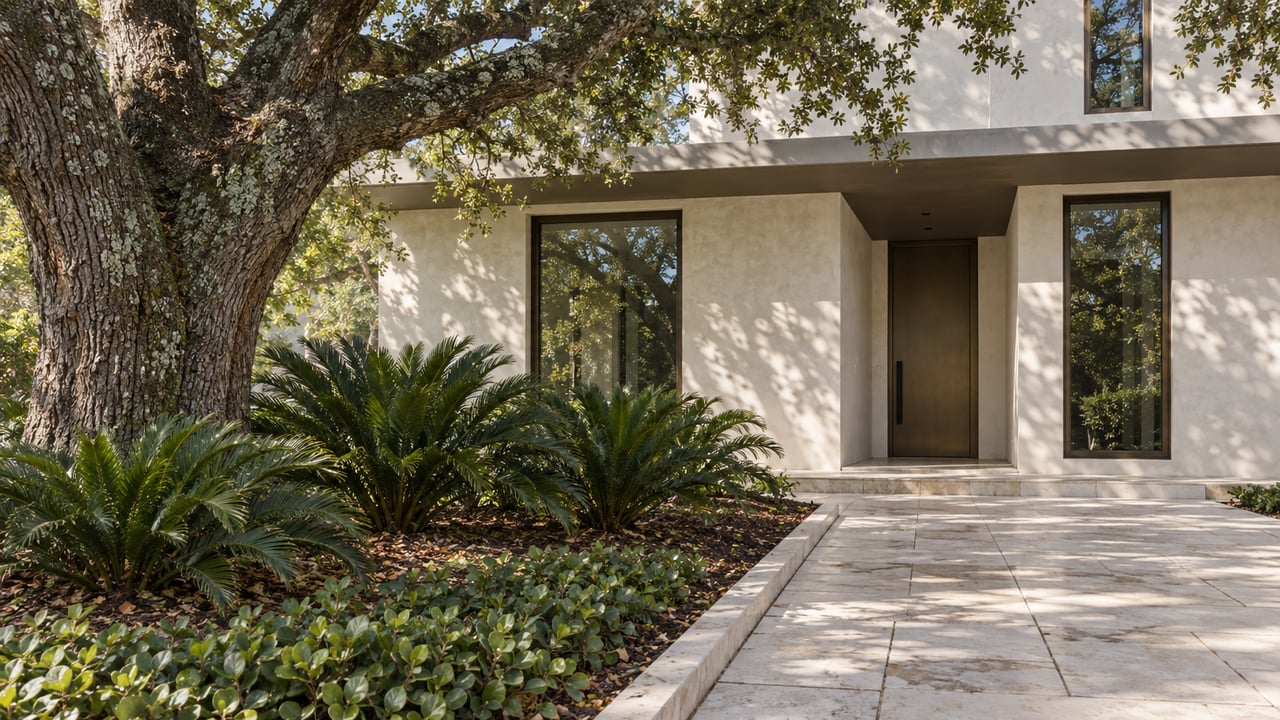
Earlier this year, a homeowner on Irvington Avenue in the South Grove had a permit path to remove a 52-foot live oak with a 30-inch trunk to make room for a new house. The paperwork cited a health problem with the tree. A certified arborist who grew up on the street disputed the finding, and neighbors organized around the disagreement. What had been a routine step in a new construction timeline became a file that, months later, was still keeping a site crew from mobilizing.
That sequence is the story worth understanding before writing an offer on a canopied lot in Coconut Grove. The zoning code still governs setback, floor area ratio, and lot coverage the way it always has. But on a growing share of Grove parcels, the document that actually decides where and when a house gets built is the tree survey, and the process wrapped around it has changed enough in the past year that treating it as an afterthought is now a real financial risk.
What Counts as a Specimen Tree
Miami-Dade County's tree protection rules scale by trunk diameter, measured at four and a half feet off the ground. The threshold that matters most on a development lot is the top tier.
| Trunk diameter (DBH) | What it triggers |
|---|---|
| 4 inches or more | Generally requires a permit before removal |
| 12 inches or more | Triggers enhanced mitigation, meaning replacement trees at a set ratio |
| 18 inches or more | Classified as a specimen tree; removal is rarely approved without documented hazard, disease, or development necessity |
Coconut Grove sits inside City of Miami jurisdiction rather than unincorporated county, so its permits run through the city's own building department. The 18-inch specimen threshold carries through regardless, and the Grove's mature canopy means a meaningfully higher share of lots have at least one tree that crosses it. An independent dashboard called Miami Canopy Watch, which tracks city permit records, has logged 28 tree-removal filings in Coconut Grove, more than any other neighborhood in its dataset.
The Appeal Window Is the Real Clock
Once the city posts an intended decision on a removal permit, a resident or an abutting property owner has ten days to appeal it to the Historic and Environmental Preservation Board. For most of the past several years that window rarely mattered. In 2025, exactly one tree-removal appeal was filed with the city.
That changed in 2026. By early summer, at least 14 appeals had been filed, and city staff added a second monthly HEPB meeting largely devoted to hearing them. The July session ran more than eight hours and drew over 100 residents, developers, and attorneys to City Hall, according to reporting from Coconut Grove Spotlight carried by WLRN. A City Commission hearing scheduled for this month includes four tree appeals, two of them involving Coconut Grove properties where the HEPB had already overturned the city's original removal decisions.
The detail that matters for anyone underwriting a lot purchase is what happens after an appeal succeeds. In both Coconut Grove cases now headed to the Commission, the city's own Environmental Resources Division has recommended siding with the property owners and reinstating the original removal permits. Staff, in other words, wanted the trees to come down. The appeal didn't change that recommendation. What it changed was the calendar, pushing a decision that once lived entirely with city staff up through a public board and now to elected commissioners, adding months regardless of which way the final ruling goes.
What the Courts Already Decided
The legal boundaries around this fight were set years before the current surge, in a case that originated in Coconut Grove's NCD-3 conservation district. In Cube 3585, LLC v. City of Miami, an appellate panel ruled that a demolition waiver in the Grove's conservation overlay can only be evaluated against tree preservation criteria, not against broader language about protecting neighborhood character. The city had argued that the waiver process could double as a backstop for historic preservation concerns. The court disagreed, holding that historic designation runs through a separate chapter of city code with its own notice and process, and that a tree waiver has to stay focused on the tree.
That ruling narrows what a neighbor can argue at a hearing, but it hasn't slowed the volume of hearings. If tree preservation is the only lever the code recognizes, then tree preservation is the lever residents are pulling, and the file on a specific specimen tree, its species, its diameter, its documented condition, has become the entire battleground for a demolition or major addition on a Grove lot.
Two 2026 Cases, Two Different Outcomes
The unpredictability cuts both ways. On Linden Lane and Kumquat Avenue, a 1924 bungalow and 26 trees on the same parcel disappeared within days of each other to clear the way for new construction, with no appeal filed in time to intervene. A few blocks over, on El Prado Boulevard and Swanson Avenue, the HEPB reversed removal permits after residents challenged them, and those trees are still standing.
Neither outcome was obvious in advance from the permit alone. A buyer comparing two lots with similar canopy and similar asking prices can no longer assume the tree file will resolve the same way on both, which is exactly why the file itself, not the listing photos, deserves the scrutiny.
What a Contested Tree Does to the Building Envelope
Even when a removal is approved outright, mitigation reshapes the site. Miami-Dade requires inch-for-inch DBH replacement. A 30-inch oak means 30 inches of trunk caliper has to go back in the ground, and a newly planted twelve-foot replacement tree doesn't arrive with a 30-inch trunk, so a single specimen removal can require several replacement trees on a lot that may not have room for them without redrawing the plan. Where physical replanting can't satisfy the requirement, the balance is paid into the city's Tree Trust Fund as an in-lieu contribution.
On a lot with three or four specimen trees inside the proposed footprint, that mitigation planting plan is what actually sets the pool's setback, the width of the motor court, and the run of a rear pergola, not the architect's first sketch.
What to Put in Diligence Before Writing an Offer
For a canopied Grove lot, a tree survey belongs in the due diligence budget alongside the home inspection, not after it.
- Commission an ISA-certified arborist survey with DBH tags before the architect finalizes siting, not after.
- Overlay the specimen inventory on the proposed footprint and model two site plans, the preferred version and a no-specimen-removal version. The difference between them is the real negotiating range on price.
- Price a mitigation and Tree Trust Fund contingency into the pre-construction estimate rather than treating it as a line item to solve later.
- Sequence the permit application so a ten-day HEPB appeal window has a realistic chance to close before demolition mobilization, not before excavation starts, since financing and insurance timelines often assume demolition proceeds on schedule.
None of this is likely to ease before next spring. The city's Tree Ordinance Advisory Committee, formed a year ago and now conducting an eight-month review with public workshops including one held at the Hangar at Regatta Harbour on Pan American Drive, isn't expected to deliver recommendations to the City Commission until next spring, and any changes would still require a commission vote after that. Both the city and county have also set a goal of 30 percent tree canopy by 2030, against current estimates closer to 17 to 20 percent, which gives the enforcement side every reason to keep pressing rather than ease off. For anyone transacting in the Grove this season, the friction described here isn't a temporary condition. It's the operating environment.
If you're weighing a lot in Coconut Grove against a comparable parcel in another Miami neighborhood, the tree file is worth reading before the floor plan is worth drawing. Santiago Ferreira works with buyers on exactly this kind of site-specific diligence, coordinating the arborist, permitting, and legal pieces before an offer goes in rather than after a closing date is already on the calendar. Schedule a private consultation to talk through a specific Grove address.