If you want a home that works for your boat as well as your lifestyle, Fort Lauderdale deserves a serious look. This is a city where waterways shape daily life, from dockage and bridge timing to dining, downtown access, and weekends on the water. In this guide, you’ll get a clear view of what makes Fort Lauderdale different, which waterfront areas stand out for boaters, and what practical details matter before you buy. Let’s dive in.
Why Fort Lauderdale Fits Boaters
Fort Lauderdale is not simply a coastal city with a few marinas. The city reports 165 miles of scenic inland waterways, while Greater Fort Lauderdale tourism materials describe more than 300 miles of navigable waterways across the broader region. That scale is a big reason boating is woven into the local lifestyle.
Greater Fort Lauderdale is also widely recognized as the Yachting Capital of the World. Visit Lauderdale reports that the region has more than 100 marinas, about 50,000 registered yachts, and roughly 2,000 superyachts visiting each year. It also says the marine industry generates a major economic impact across Broward County and the broader region.
For you as a buyer, that translates into more than image. It means boating infrastructure is part of the market, with municipal docking, boat-launching sites, complimentary pump-out locations, and public facilities such as Cooley’s Landing and New River/Downtown Docking listed by the city.
The Lifestyle Goes Beyond the Dock
One reason Fort Lauderdale stands out is that boating here connects easily to daily life on land. The city describes Las Olas Boulevard as a centerpiece for fashion, dining, and entertainment, while Riverwalk anchors the arts and historic district. Visit Lauderdale also highlights waterfront dining along the New River, Intracoastal, and canal system.
Water-based transportation adds another layer. Water Taxi runs year-round with more than 30 stops across Fort Lauderdale, Pompano Beach, and Hollywood, and the city’s free Water Trolley adds eight stops along the New River route. If you value being able to move between waterfront destinations without always getting in a car, that matters.
The boating culture also shows up in major events. Visit Lauderdale says the Fort Lauderdale International Boat Show is the world’s largest in-water boat show, with more than 1,300 boats, 1,000 exhibitors, and over 100,000 visitors from 52 countries. The annual Winterfest Boat Parade follows a 12-mile Intracoastal route, which says a lot about how visible boating is in the city’s social calendar.
Waterfront Areas Boaters Watch Closely
Not all waterfront addresses in Fort Lauderdale function the same way for boat owners. The best fit often depends on your vessel, your preferred cruising routes, and how much you care about beach access, downtown convenience, or a more canal-focused setting.
Las Olas Isles and Las Olas Corridor
Las Olas Isles often draws attention from buyers who want boating and urban access in the same package. City materials describe Las Olas in The Isles district as a waterfront corridor linking downtown Fort Lauderdale and Fort Lauderdale Beach, which helps explain the area’s appeal.
The city also confirmed completion of the Las Olas Isles utility undergrounding project in 2024, covering streets and isles including Mola Avenue, Isle of Capri Drive, Bontona Avenue, Lido Drive, San Marco Drive, Coral Way, Royal Plaza Drive, Isle of Palms Drive, and Coconut Isle Drive. For buyers focused on established waterfront streets near restaurants, beach access, and downtown activity, this corridor often stays on the shortlist.
Rio Vista
Rio Vista sits between US-1, the Intracoastal Waterway, the New River, and SE 12th Street, according to the city’s survey. The area also connects to beach access over SE 17th Street or via Las Olas Boulevard through downtown, which can be attractive if you want both boating utility and convenient access to the broader city.
The city completed the Tarpon River restoration project in Rio Vista in 2022, dredging about 800 feet and removing roughly 2,000 cubic yards of sediment. That is a useful signal that waterway maintenance plays a role in the area’s long-term function for waterfront owners.
Colee Hammock
Colee Hammock is bounded by East Broward Boulevard, the Sospiro Canal, the New River, and the Himmarshee Canal with SE 9th and 12th avenues, based on the city’s architectural survey. The survey notes that many original structures along the New River, Sospiro Canal, and Himmarshee Canal have been replaced over time by larger single-family homes.
For buyers, Colee Hammock can appeal when proximity to downtown and established river or canal frontage matter. It is one of the locations where boating access and central-city positioning intersect in a meaningful way.
Lauderdale Isles
Lauderdale Isles has a distinctly canal-driven identity. The city’s water management district says its purpose is to protect and improve 10 canals and part of the North New River Canal within Lauderdale Isles, with responsibilities that include safe navigation, canal depths, obstructions, debris, dredging, and dock or derelict-vessel issues.
That tells you something important. In Lauderdale Isles, the canal network is treated as active infrastructure, not just a view. Lauderdale Isles Landing also adds public boat access and a ramp, which may matter if you want water access options beyond a private dock.
Bigger Yachts Versus Smaller Boats
If you own a larger yacht, bridge planning and route planning are part of everyday decision-making. NOAA’s Coast Pilot notes that the East Las Olas Bridge opens on the quarter-hour and three-quarter hour, the SE 17th Street Bridge opens on the hour and half-hour with reduced openings during weekday rush periods, and the Andrews Avenue Bridge opens on signal but also has rush-hour limits.
Those schedules can shape how easy it is to leave the dock, return from a day out, or move through the Intracoastal and New River corridors. In practical terms, larger vessels often need more careful attention to both bridge opening schedules and bridge clearances before you choose a specific canal or waterfront street.
Farther up the New River, clearance becomes even more important. NOAA reports tighter crossings such as Third Avenue at 16 feet, Andrews Avenue at 21 feet, and the Florida East Coast Railway bridge at 4 feet. That means vessel height is not a minor detail. It can directly affect which neighborhoods and waterways are realistic for you.
Smaller boats have more flexibility, but they still benefit from the same location analysis. If your boat allows easier movement through bridge systems and tighter waterways, you may be able to prioritize other lifestyle goals such as being closer to downtown, Las Olas, or the beach.
Private Dock, Marina, or City Docking?
Many buyers start with the assumption that a private dock is always the right answer. In reality, the best setup depends on how you use your boat, how often you go out, and whether your vessel size changes the dockage equation.
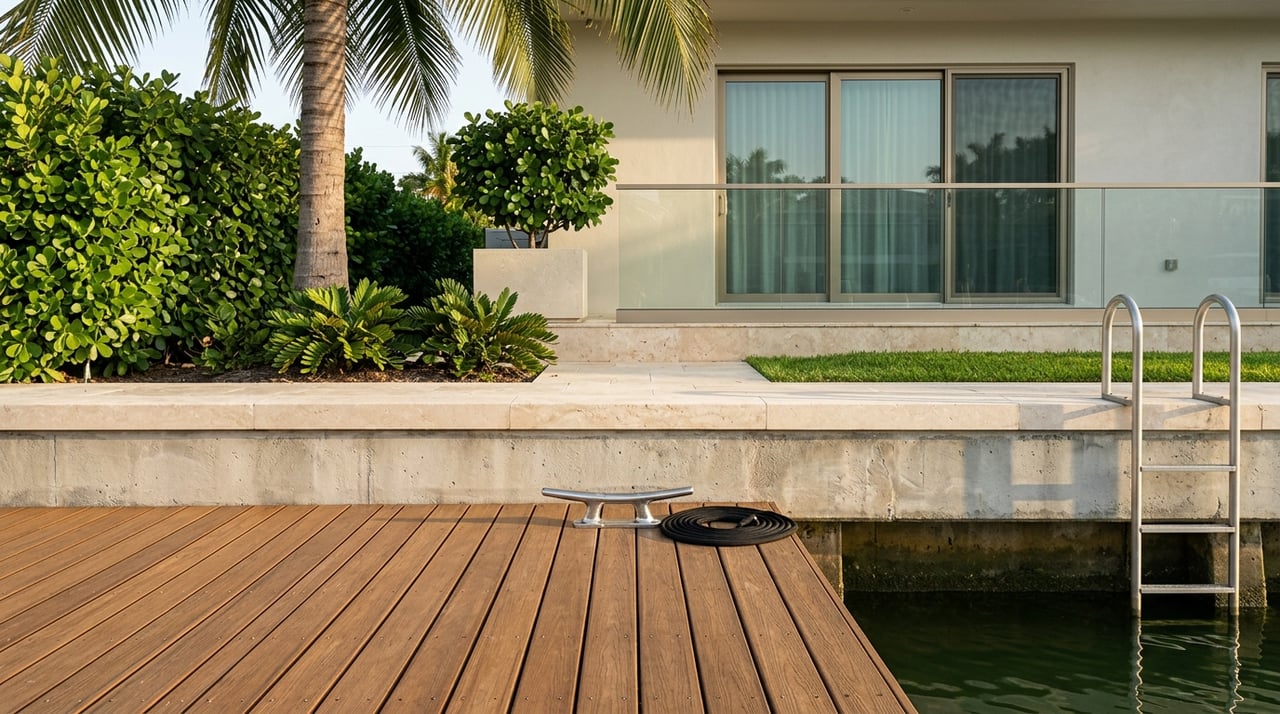
A private dock can offer convenience, privacy, and direct control over your day-to-day access. That can be especially appealing if you boat often and want a seamless departure without relying on outside facilities.
At the same time, Fort Lauderdale’s boating ecosystem gives you more than one path. The city lists municipal docking, launching sites, and public facilities, while the wider area includes more than 100 marinas according to Visit Lauderdale. For some buyers, easy access to nearby marina services or city docking may be just as valuable as private frontage.
A useful way to think about it is this:
| Priority | Best Fit |
|---|---|
| Frequent personal boating | Private dock |
| Larger vessel with service needs | Marina access may matter more |
| Occasional boating or added flexibility | Public launch or city docking can help |
| Lifestyle-first purchase | Balance dockage with location and access |
Daily Cruising Realities to Understand
A waterfront home may look ideal on paper, but boating function depends on the route between your dock and open water. Bridge schedules, bridge heights, no-wake or regulated speed areas, and turning room all affect your day-to-day experience.
NOAA’s Coast Pilot notes regulated speed zones for manatee protection in parts of the South New River Canal, Port Everglades, and the Dania Cut-Off Canal. So even in a city built around boating, some corridors require slower, rule-bound cruising.
Fort Lauderdale also takes waterway management seriously. The city has a Chief Waterways Officer focused on waterways, navigability, and safety, and it funds waterway quality monitoring with Miami Waterkeeper at sites including Himmarshee Canal and Lauderdale Isles Landing. For buyers, that is a sign that navigability and water quality are active local priorities.
Fort Lauderdale vs Miami and Palm Beach
If you are comparing South Florida boating markets, Fort Lauderdale offers a distinct profile. The city is centrally located between Miami and Palm Beach, which is part of its appeal for buyers looking at the region as a whole.
Miami is also a major boating center, but the City of Miami says its marina division owns and operates more than 1,300 wet slips, dry racks, and mooring buoys. That points to a more marina-concentrated environment in many parts of the market.
Palm Beach presents a different setup. The Town of Palm Beach says its marina has 84 slips for vessels from 60 to 295 feet, and the area is more closely tied to an island and Intracoastal pattern than to a broad residential canal grid.
Taken together, the available local and boating sources suggest a helpful distinction. Fort Lauderdale is the most canal-dense and neighborhood-driven boating base of the three, Miami is the most urban and marina-heavy, and Palm Beach is the most island-oriented.
What to Prioritize Before You Buy
When you evaluate Fort Lauderdale waterfront property for boating, focus on function before aesthetics alone. A beautiful dock line means less if your bridge sequence, draft needs, or vessel height create daily friction.
Start with a few practical questions:
- How quickly do you want to reach the Intracoastal or ocean?
- Does your vessel require specific bridge clearances or opening schedules?
- Do you prefer protected canal frontage or faster open-water access?
- Is walkability to Las Olas or proximity to downtown part of your lifestyle goal?
- Do you need a private dock, or would nearby marina and public access options support your needs?
The best waterfront purchase is usually the one that aligns your boating pattern with your broader lifestyle. In Fort Lauderdale, that balance can look very different from one canal system or neighborhood to the next.
If you are considering a waterfront purchase in Fort Lauderdale, a strategy-first search can save time and reduce costly missteps. Santiago Ferreira offers discreet, high-touch advisory for luxury waterfront buyers, including off-market sourcing and tailored guidance for complex and cross-border transactions.
FAQs
What makes Fort Lauderdale a strong boating city for waterfront buyers?
- Fort Lauderdale combines 165 miles of scenic inland waterways within the city, more than 300 miles of navigable waterways across Greater Fort Lauderdale, extensive marina infrastructure, municipal docking, and a boating-centered lifestyle tied to dining, events, and daily transportation.
Which Fort Lauderdale waterfront areas are most relevant for boaters?
- Las Olas Isles, Rio Vista, Colee Hammock, and Lauderdale Isles stand out because each offers a different mix of canal access, proximity to the Intracoastal or New River, and access to downtown, beach routes, or public boating facilities.
How do bridge openings affect boating in Fort Lauderdale?
- Bridge openings can materially affect your daily cruising schedule, especially for larger vessels. NOAA notes set opening times for key bridges such as East Las Olas Bridge and SE 17th Street Bridge, along with rush-hour restrictions on some crossings.
Why do bridge heights matter for Fort Lauderdale waterfront homes?
- Bridge height can determine whether your vessel can realistically use certain waterways. NOAA reports tighter clearances farther up the New River, including crossings at 16 feet, 21 feet, and 4 feet, so vessel height should be reviewed before choosing a location.
Should you choose a Fort Lauderdale home with a private dock or rely on marina access?
- The right choice depends on how often you boat, your vessel size, and the level of service you want. A private dock offers direct convenience, while marina access or city docking may better suit some owners depending on boating patterns and property priorities.
How does Fort Lauderdale compare with Miami and Palm Beach for boaters?
- Based on local and boating sources, Fort Lauderdale is the most canal-dense and neighborhood-driven boating base, Miami is more urban and marina-heavy, and Palm Beach is more island-oriented and closely tied to its Intracoastal setting.