Coral Gables now has two permit timelines for the same roof, the same windows and the same coat of exterior paint. Which one applies depends on whether the address is on the city's historic register or inside one of its historic districts. That status used to matter mainly for architecture. Since the city's Same Day Permit Program started, it also decides how soon work can begin after closing.
For a buyer planning updates after the sale, or a seller lining up work before listing, designation status is now a scheduling question as well as a design question. It belongs in diligence before the offer is written, next to the inspection report.
What the fast lane covers, and the line it draws
On September 24, 2026, the City of Coral Gables announced the Same Day Permit Program, a pilot run by Development Services that gives faster review at no added cost. Enrollment is automatic. Qualifying applications filed through the city's online portal go into the program without a separate form. An application submitted before 8 a.m., with its initial fees paid, is reviewed that day. Later submissions are reviewed by the end of the next business day.
The eligible work at single-family homes is the routine upkeep owners plan right after a purchase: roofing, doors and windows, exterior painting, asphalt driveways, and certain kitchen and bathroom renovations.
The city's permits page lists what the program does not cover:
- Historic properties, or properties within historic districts
- Projects using private providers
- Projects requiring structural or mechanical review
- Sub-permits filed under a master permit
- Kitchen or bathroom renovations involving HVAC work, or range hoods that require outside air or ventilation
The first exclusion is the one that splits the city's housing stock. The wording covers properties within historic districts as well as designated buildings. The city's interactive historic map has separate layers for contributing and non-contributing properties inside a district. The program's exclusion makes no such distinction. A buyer who hears that a home is "non-contributing" should not assume it qualifies for same-day review.
The pilot's first month, read as a timeline
The city reported 158 qualifying applications in the program's first month, with 295 individual discipline reviews completed. Of those 158 applications, 65 were approved and 52 permits were issued. By the time the city released those numbers, fewer than half of the enrolled applications had reached approval.
The city says this directly. Same-day review does not guarantee approval or permit issuance, and applications that need corrections or more information must be updated before they can move forward. Once every required discipline has approved an application, the applicant is invoiced for the remaining fees. If those fees are paid the same day, the permit is issued that evening and work can begin. Doug Ramirez, acting director of Development Services, described the program's purpose as making permitting "as straightforward and efficient as possible for residents completing routine home improvement projects."
Even the fast lane depends on a clean submission. In practice, the first month's results set the best case for any Coral Gables home: when an application is complete, review can finish within a business day.
What the same project looks like on the historic side
For properties on the Coral Gables Register, permits for exterior alterations cannot be issued until the owner has a Certificate of Appropriateness, reviewed either by Historic Preservation Division staff or by the Historic Preservation Board. The city's COA application also requires a Board of Architects recommendation before filing, and applicants or their representatives must attend board hearings.
| Routine project | Non-historic home | Designated home or home in a historic district |
|---|---|---|
| Reroofing | Auto-enrolled in same-day review if eligible | COA first; the city's guide lists reroofing as minor work suited to staff review |
| Exterior painting | Auto-enrolled in same-day review if eligible | COA first; painting is listed as minor work |
| Window or door replacement | Auto-enrolled in same-day review if eligible | COA first; replacement that changes historic appearance may go to the Board |
| Additions, demolition, major exterior remodel | Outside the program because of structural review | Historic Preservation Board public hearing |
| Zoning variance | Standard variance process | Special COA before the Board |
The city does not publish a standard turnaround time for an administrative COA or a typical number of weeks for Board review. Its posted 2022 deadline calendar showed one Board meeting a month, with dates marked tentative. Any timeline a contractor quotes for a historic home is an estimate, and buyers should treat it as one.
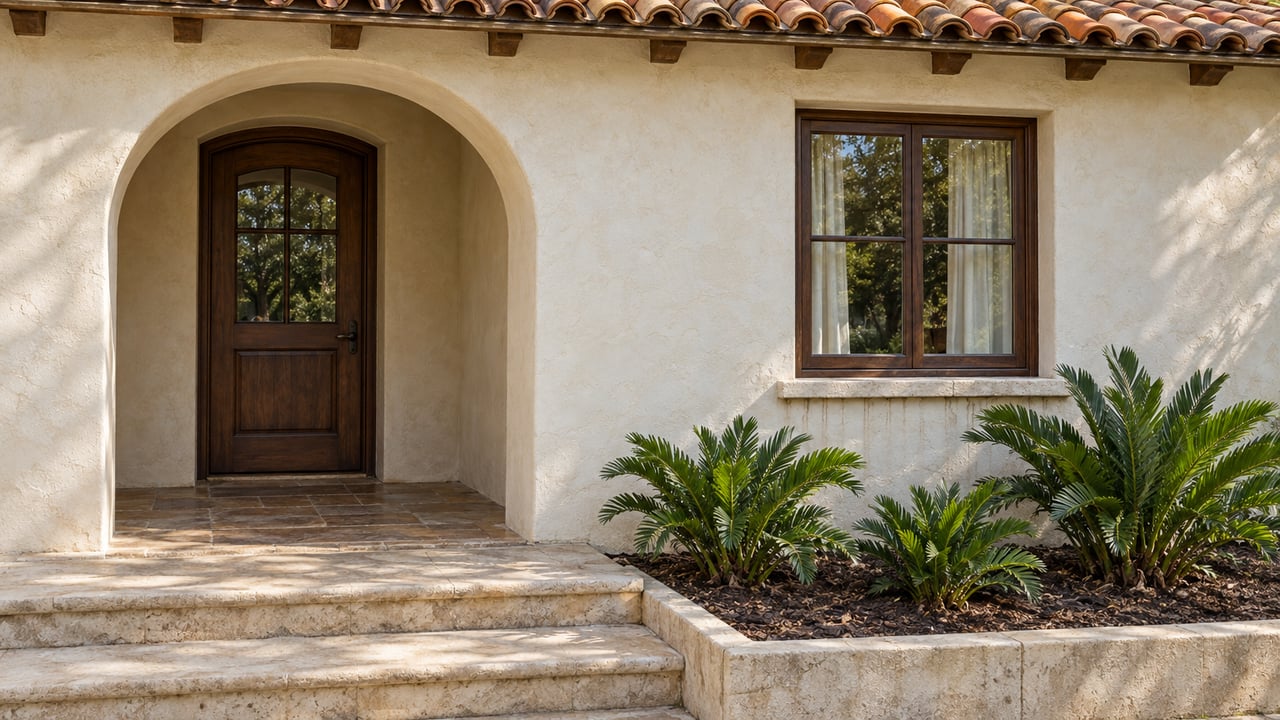
Material standards add more time. The city's preservation guide favors repairing deteriorated historic features over replacing them. When replacement is necessary, the new feature should match the old one in design, color, texture and visual qualities, and in materials where possible. The guide names barrel-tile roofs and wooden doors as historic character features and calls windows especially important to a building's architectural character. A window package specified for an eligible non-historic home may need to be redesigned before it can be approved for a historic one.
Three recent cases that show the friction
The Historic Preservation Board's 2026 agendas show how ordinary residential work moves through this process.
547 Alcazar Avenue
At the May 21, 2026 meeting, the Board considered an application for 547 Alcazar Avenue, in the Alcazar Avenue Historic District. The owner proposed enclosing an open front porch with impact-resistant windows and doors. Impact-rated glass is usually a resilience upgrade. Here it was part of a change to a historic façade, and that put it in front of the Board.
410 Menorca Avenue
In mid-September 2026, the Board approved a revised Special COA for 410 Menorca Avenue that included a rear second-story addition and site work, with conditions attached. The word "revised" means the project came back to the Board, and an approval with conditions can still affect final drawings and pricing.
826 Ortega Avenue
The December 2025 agenda shows designation working in the other direction. The property at 826 Ortega Avenue appeared for local designation together with an accelerated Special COA, additions and alterations, and several zoning variances. A 2026 agenda listed a similar package for 2716 Granada Boulevard, and its minutes were still in draft. For some owners, the register is a way to get zoning flexibility through the Board's power to grant variances that keep a historic property's architectural continuity. The trade-off is that routine work on that home will then follow the historic path.
How much of the city this touches
Coral Gables Magazine reported in November 2025 that the city has more than 1,200 historically designated properties and 20 historic districts, including seven architecturally themed villages. Districts named in city records include Alcazar Avenue, Alhambra Circle, Castile, Obispo, Santa Maria, French Normandy Village, Italian Village and Country Club of Coral Gables.
That is a meaningful share of the housing stock that buyers often look for in Coral Gables because of its architecture. Many of the features that set those homes apart are the same features that take them out of the fast lane.
Pre-offer diligence for a home you plan to update
- Look up the address on the city's Map of Historic Districts and Properties and check whether it sits in a district or carries an individual designation.
- Cross-check the address against the city's Locally Designated Properties register, which is marked current through July 16, 2026.
- Sort your planned work by track. On an eligible home, check whether the kitchen plan includes HVAC changes or a range hood that needs outside air, since either one removes the project from the program. On a historic home, find out which items staff can approve and which may go to the Board.
- Ask Historical Resources staff which review route applies to your specific scope. The city's guide does not settle every driveway or replacement-window case in advance.
- Leave the fee line open until the city confirms it. Coral Gables amended its historic preservation fees on September 15, 2026, so older published fee sheets should not be relied on.
Frequently asked questions
If my application qualifies, can work start the same day? Only if the application passes every discipline review without corrections and the remaining fees are paid that day. In that case the permit is issued that evening.
My home is non-contributing within a historic district. Does it qualify? The program excludes properties within historic districts, and the published wording does not separate contributing from non-contributing homes. Confirm with the city before you count on same-day review.
Can a non-historic home be removed from the program? Yes. A Board of Architects reviewer can remove an application if it cannot be approved administratively.
Is this a permanent program? The city calls it a pilot.
If you are weighing a historic Coral Gables home against one that qualifies for same-day review, Santiago Ferreira can help you confirm the designation status, map out the review track for the work you plan, and factor that timeline into your offer. Schedule a private consultation.